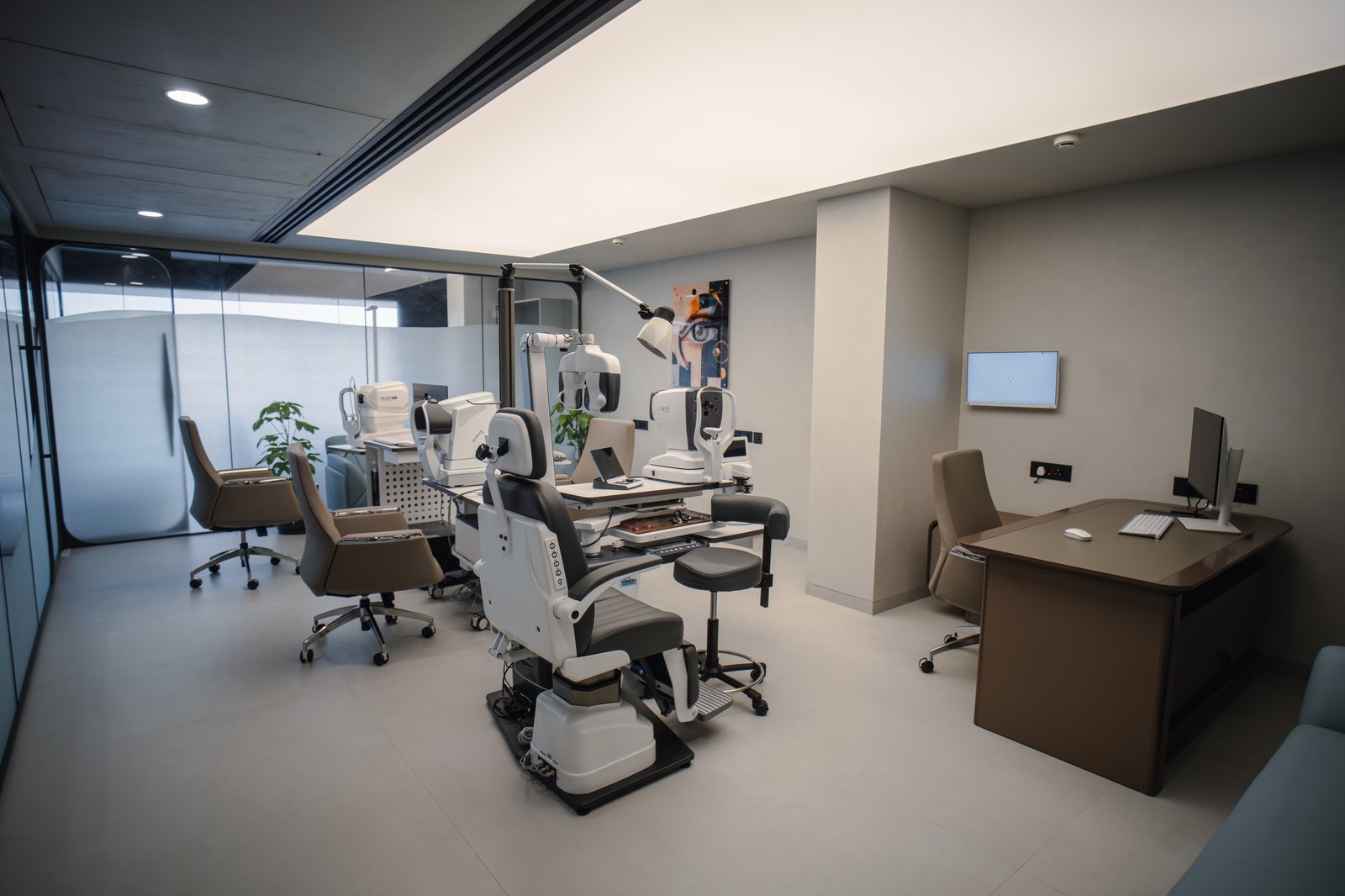
If you live with diabetes, your eyes need attention even when your vision feels perfectly fine. Diabetic retinopathy — damage to the tiny blood vessels of the retina — is one of the most common and preventable causes of vision loss worldwide. The difficult part is that in its early stages, it usually causes no symptoms at all.
What is diabetic retinopathy?
High blood sugar over time weakens the small blood vessels at the back of the eye. They can leak fluid, bleed, or close off, starving the retina of oxygen. In advanced stages, fragile new vessels grow and can cause serious bleeding or retinal detachment. Because the retina is the "film" that captures what you see, this directly threatens sight.
⚠️ The silent danger: by the time vision blurs, the disease may already be advanced. This is exactly why screening — before symptoms appear — is so important.
Warning signs to never ignore
- Blurred or fluctuating vision.
- Dark spots, floaters or cobwebs in your vision.
- Difficulty seeing at night.
- Colours appearing washed out.
- Sudden loss of vision — this is an emergency.
How often should you be screened?
As a general guide:
- Type 2 diabetes: a retina check at the time of diagnosis, then at least once a year.
- Type 1 diabetes: within 5 years of diagnosis, then yearly.
- During pregnancy: more frequent checks, as diabetes can change quickly.
Your eye doctor may advise more frequent visits if any changes are found.
What screening involves
It's simple and painless. We examine the retina, often capturing a fundus photograph and, where needed, an OCT scan to look at the retina in cross-section. At ShivAnuj, our imaging includes a non-mydriatic fundus camera, so in many cases screening is quick and comfortable.
Key takeaways
- Early diabetic retinopathy has no symptoms — screening is the only way to catch it.
- Most people with diabetes should have a retina check at least once a year.
- Good blood sugar, blood pressure and cholesterol control protect your eyes.
- Caught early, vision loss from diabetes is largely preventable.
The good news
When detected early, diabetic retinopathy can be managed effectively — with better diabetes control, retinal laser, or anti-VEGF injections when needed. The single most powerful step you can take is to not wait for symptoms. A yearly check is one of the best investments in your long-term sight.
Living with diabetes?
Protect your vision with a yearly retina check at ShivAnuj Eye Hospital, Vadodara.
Book on WhatsApp →This article is for general information and patient education only. It is not a substitute for a personal medical consultation. Please consult a qualified doctor for advice specific to you.