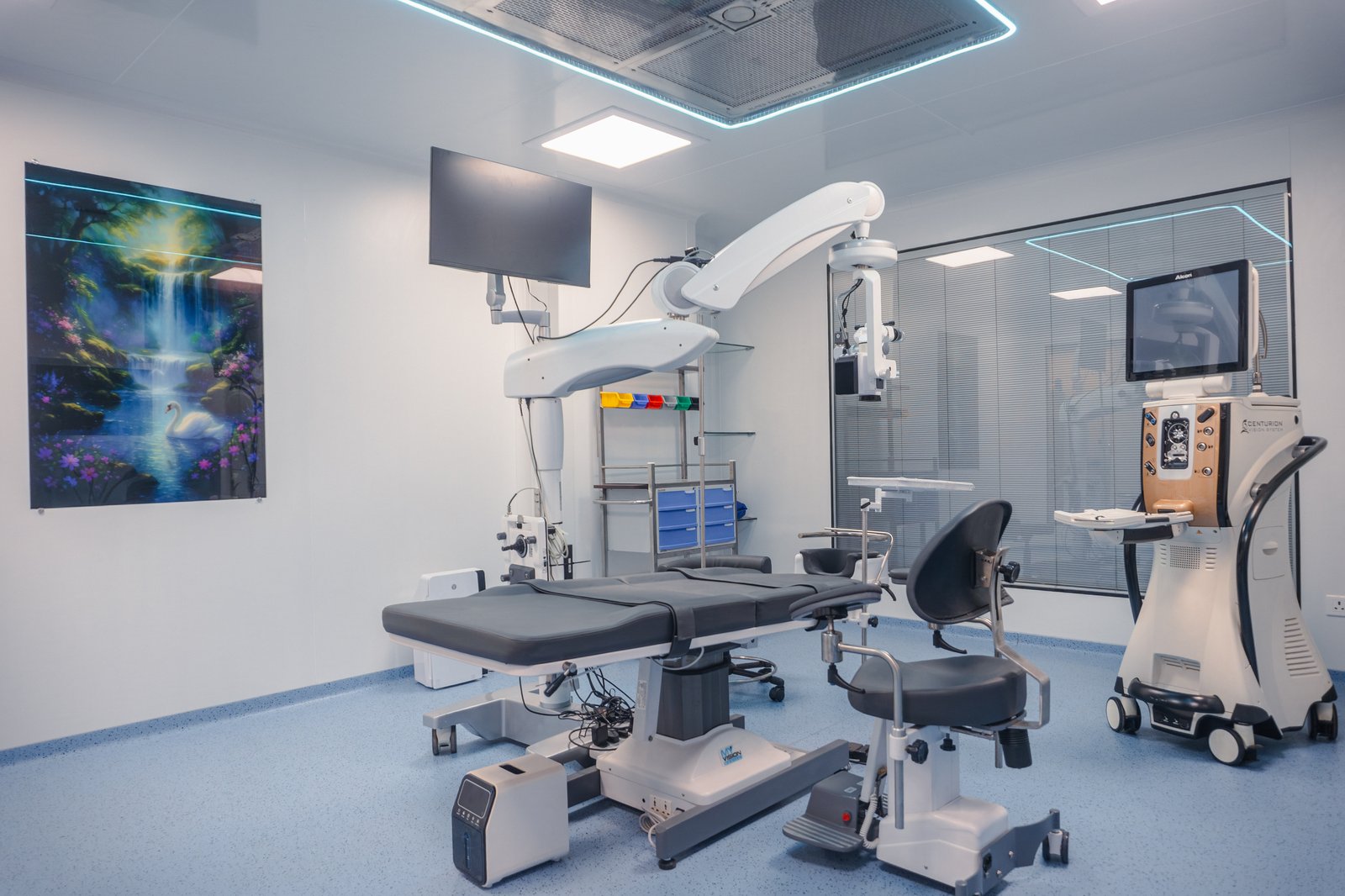
Cataract is one of the most common reasons for blurred vision after the age of 50 — and also one of the most treatable. Yet many people live with cloudy, dull vision for years because they aren't sure whether it's "bad enough" for surgery. The honest answer is simple: cataract surgery is right when your vision starts limiting the things you want to do.
In this guide, Dr. Anuj Kodnani explains what a cataract actually is, the real-world signs it's time to act, how modern surgery works, and what recovery looks like.
What exactly is a cataract?
Inside your eye is a natural lens that focuses light onto the retina. With age, the proteins in this lens slowly clump together and the lens becomes cloudy — like looking through a foggy or frosted window. This clouding is a cataract. It is a normal part of ageing, not a disease you "catch," and it cannot be cleared with drops, glasses, or exercises. The only proven treatment is to replace the cloudy lens with a clear artificial one.
The real signs it may be time
You don't need to wait until the cataract is "fully mature." Consider an evaluation if you notice:
- Cloudy or blurry vision that glasses no longer fully correct.
- Glare and halos around headlights and streetlights, making night driving difficult.
- Faded or yellowed colours — whites looking dull or brownish.
- Frequent changes in your spectacle number.
- Difficulty reading in low light, or needing much brighter light than before.
- Double vision in one eye.
💡 A useful test: ask yourself whether your vision is stopping you from driving comfortably, reading, watching TV, cooking, or recognising faces. If the answer is yes, it's worth getting checked — even if someone told you to "wait until it ripens." That advice is outdated.
How modern cataract surgery works
Today's cataract surgery is a world away from the older techniques. At ShivAnuj, we use phacoemulsification — a micro-incision, stitch-free technique:
- The eye is numbed with simple anaesthetic drops — no injection in most cases.
- A tiny opening (around 2 mm) is made; no stitches are needed.
- The cloudy lens is gently broken up using ultrasound and removed.
- A clear, custom-measured intraocular lens (IOL) is placed inside the eye.
The procedure usually takes 10–15 minutes per eye and is done as day-care — you go home the same day. Most patients notice clearer vision within a day or two.
Choosing your lens (IOL)
The lens implanted during surgery stays with you for life, so the choice matters. Broadly, there are:
- Monofocal lenses — excellent clarity at one distance (usually far); you'll use glasses for reading.
- Multifocal / trifocal lenses — designed to reduce dependence on glasses for both distance and near.
- Toric lenses — correct astigmatism at the same time.
The right choice depends on your eyes, your lifestyle, and your visual goals. We measure your eye precisely with the ZEISS IOL Master 700 and discuss the options with you before deciding together.
Key takeaways
- Cataract surgery is appropriate when vision affects daily life — you don't have to wait for it to "ripen."
- It's a quick, stitch-free, day-care procedure with rapid recovery.
- The lens you choose shapes your dependence on glasses afterwards.
- A proper evaluation is the only way to know what's right for your eyes.
What recovery looks like
Most people resume light daily activities the next day. You'll use eye drops for a few weeks and avoid rubbing the eye, dusty environments, and swimming for a short period. We review you the day after surgery and again over the following weeks to ensure healing is on track.
Not sure if it's time?
Book a cataract evaluation at ShivAnuj Eye Hospital, Vadodara. We'll examine your eyes, measure precisely, and give you honest advice.
Book on WhatsApp →This article is for general information and patient education only. It is not a substitute for a personal medical consultation. Please see a qualified ophthalmologist for advice specific to your eyes.